
Winter Whale Safari in Tromsø: A Family Guide
Seeing a whale in the wild can be one of those experiences children remember for years.
A black dorsal fin breaks the surface.
An orca family travels through the fjord.
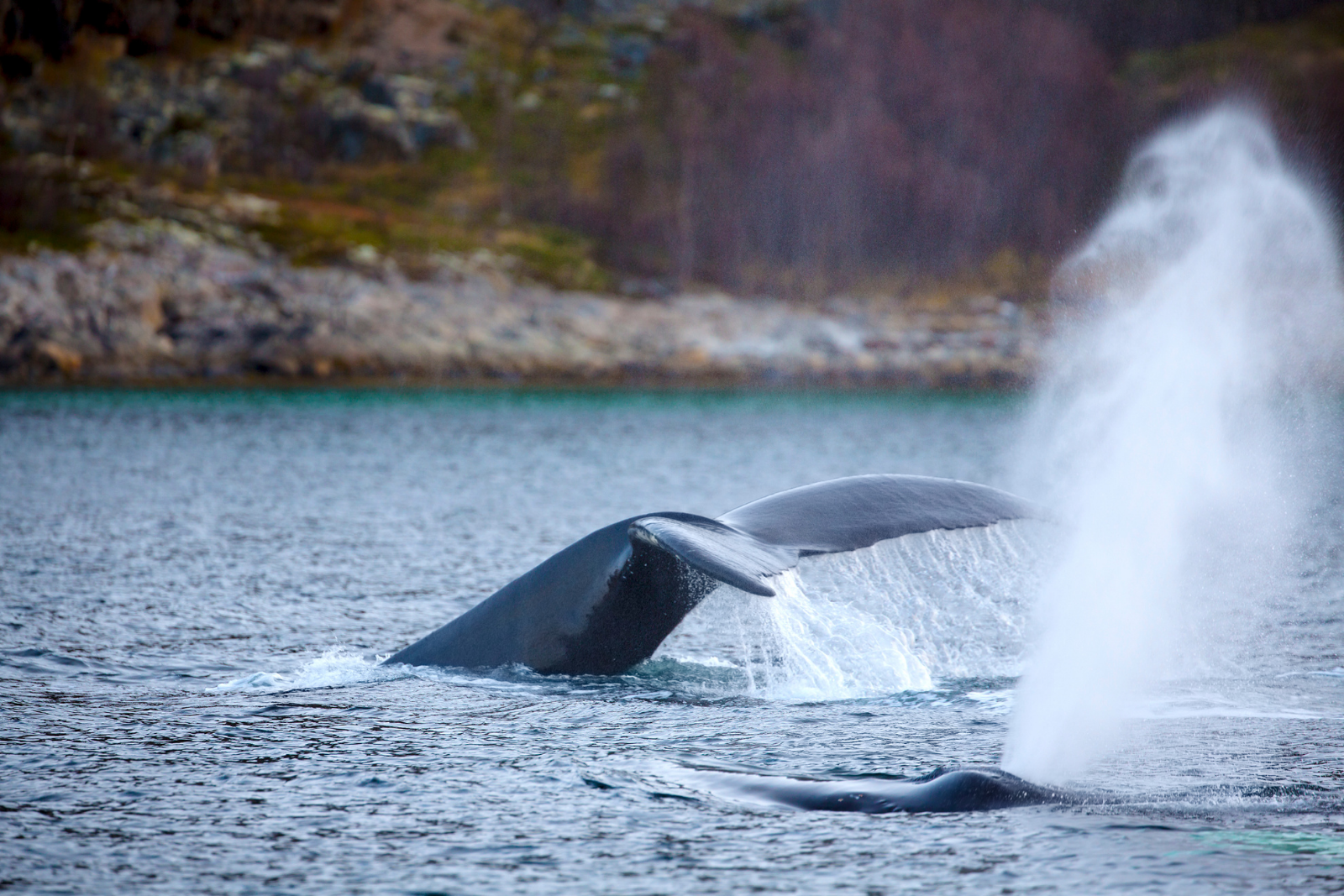
A humpback whale breathes against a backdrop of snow-covered mountains.
For families visiting Tromsø in winter, a whale safari can be an extraordinary way to experience the Arctic together.
But there is another side parents should understand before booking:
This is a full-day winter wildlife expedition.
The Arctic Whale Tours Winter Whale Safari normally lasts around 8 hours, with some variation depending on weather, sea conditions and where the whales are located.
There can be several hours of sailing.
It can be cold.
The sea can move.
And wildlife does not appear on command.
So rather than simply calling this tour "family-friendly," this guide will help you decide whether it is actually right for your family.
Can Children Join the Tromsø Whale Safari?
Yes.
The current minimum age for the Arctic Whale Tours Winter Whale Safari is 1 year old.
Children under 16 must remain accompanied by an adult.
But meeting the minimum age does not automatically mean the trip will suit every child.
Parents should also consider whether their child is comfortable with:
- An early start
- Around eight hours away from the harbour
- Long periods of sailing
- Cold winter conditions
- Possible vessel movement
- Waiting for wildlife
- Changing weather
- Spending much of the day aboard a boat
A five-year-old who loves boats and wildlife may find the day fascinating.
Another child of the same age may struggle with several hours of travel before the first whale appears.
You know your child better than anyone else.
Is MS Alba Stroller Accessible?
No.
This is an important correction to older information about the safari.
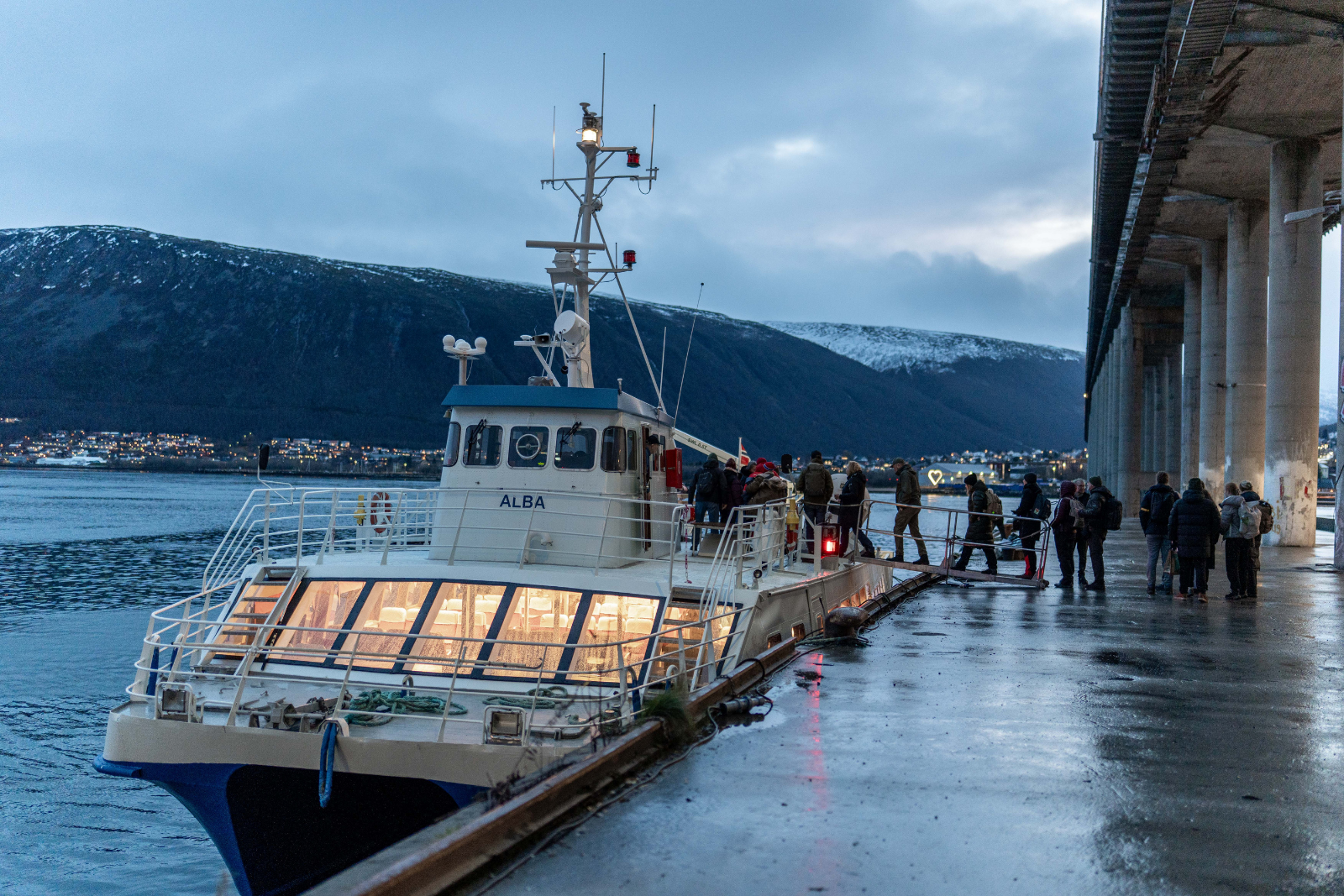
MS Alba is not stroller accessible.
It is also not wheelchair accessible.
There are stairs aboard the vessel, so families with very young children should consider this before booking.
If mobility or carrying a small child could be difficult for someone in your group, contact Arctic Whale Tours before booking to discuss the practical situation.
How Long Is the Whale Safari?
The current scheduled duration is approximately:
8 hours ±1 hour
The actual length depends on:
- Whale location
- Weather
- Sea conditions
- Wildlife activity
- The journey required to reach and return from the search area
This means families should avoid planning the day as if the boat is guaranteed to return at one exact minute.
Allow some flexibility after the safari.
Why Does the Trip Take So Long?
The whales are not permanently located outside Tromsø Harbour.
Winter whale watching in Northern Norway is closely connected with herring.
Orcas and humpback whales may follow large herring concentrations through the fjord systems.
When the fish move, the whales can move too.
That means MS Alba may need to travel a considerable distance from Tromsø before reaching the areas where whale activity is most promising.
The journey itself is therefore a major part of the day.
If your family expects to leave Tromsø and see whales ten minutes later, expectations will be very different from reality.
For the science behind these movements, read Do Orcas and Humpbacks Come to Tromsø Every Winter?.
What Happens During the Journey?
After leaving Tromsø, MS Alba heads north through the Arctic coastal landscape.
During the sailing sections, families can experience:
- Snow-covered mountains
- Fjords
- Islands
- Coastal communities
- Seabirds
- Arctic winter light
Guides also introduce guests to the marine environment and explain more about the animals we are hoping to find.
Children who enjoy animals can learn about:
- Orcas
- Humpback whales
- Herring
- Whale communication
- Feeding behaviour
- Migration
- Arctic wildlife
- Responsible whale watching
This can turn the travel time into part of the experience rather than simply waiting to reach the whales.
Which Whales Might Children See?
Winter whale watching in Northern Norway is particularly associated with orcas and humpback whales.
Orcas
Orcas are social animals that often travel in family groups.
Children may see them:
- Travelling together
- Surfacing
- Searching for food
- Feeding
- Resting
- Socialising
Sometimes several animals surface one after another.
A large adult male can be particularly easy to recognise because of his tall dorsal fin.
Humpback Whales
Humpback whales are much larger.
One of the most recognisable moments happens when a humpback prepares for a deeper dive and raises its tail above the water.
Other cetaceans can occasionally appear as well.
But families should understand one important rule before boarding:
No particular whale species is guaranteed.
Will We Definitely See Orcas?
No.
This is especially important when preparing children.
It is tempting to tell them:
"Tomorrow we're going to see orcas!"
A better way to explain the trip is:
"Tomorrow we're going out to search for whales."
That small difference creates much more realistic expectations.
Whales are wild animals.
They can change location.
Sometimes the search takes a long time.
Sometimes another species appears instead.
And occasionally no cetaceans are found.
Treating the safari as a wildlife search rather than a scheduled performance helps children understand what makes the encounter special.
What Happens When Whales Are Found?
The atmosphere on the boat can change very quickly.
After several hours of travelling and searching, somebody may suddenly spot a blow or dorsal fin.
The guides tell guests where to look.
People head toward the outdoor decks.
This can be one of the most exciting parts of the day for children.
But responsible whale watching also requires patience.
The captain does not simply race straight toward an animal.
The crew first considers what the whales are doing.
They may be:
- Travelling
- Feeding
- Resting
- Diving
- Socialising
The goal is to observe them without unnecessarily disturbing their natural behaviour.
This also provides a good opportunity to teach children something important:
Wild animals do not exist to perform for us.
We are visitors in their environment.
Will Children See Whales from Inside?
MS Alba's indoor lounge has panoramic windows, so it may sometimes be possible to see wildlife without remaining outside.
However, the clearest views generally come from the outdoor observation areas.
A useful family strategy is therefore:
Stay warm indoors while travelling.
Then:
Go outside when wildlife is found.
Afterwards, return inside to warm up again.
This is often much more comfortable than keeping children outdoors for several continuous hours.
How Cold Will It Be?
Probably colder than it feels when you leave your accommodation in Tromsø.
Being on the water changes things.
Wind, humidity and time outdoors can make conditions feel significantly colder.
Children can also become cold more quickly than adults, particularly when standing still waiting for wildlife.
Dress them in layers.
Base layer
Use wool or thermal underwear.
Middle layer
Add warm insulation such as:
- Wool
- Fleece
- Warm sweater
Outer layer
Use clothing that protects against wind and moisture.
Don't forget
- Warm hat
- Gloves or mittens
- Neck warmer
- Wool socks
- Insulated winter boots with good grip
Bring an extra pair of gloves for children if possible.
Wet or lost gloves can quickly make a winter day uncomfortable.
Should Families Bring Food?
Yes.
A meal is not included on the Tromsø whale safari.
Arctic Whale Tours provides:
- Coffee
- Tea
- Biscuits
For an eight-hour trip, families should bring their own lunch and additional snacks.
Useful options include:
- Sandwiches
- Fruit
- Energy bars
- Crackers
- Chocolate
- Other familiar foods your children actually enjoy eating
Bring enough food for the whole day.
There are no cafés once MS Alba has left the harbour.
For younger passengers especially, familiar snacks can also make longer travel periods easier.
What About Hot Chocolate?
Do not assume hot chocolate is provided.
The current included drinks are coffee and tea, together with biscuits.
If there is something specific your child needs or prefers, bring it yourself if practical.
What About Seasickness?
This may be one of the most important considerations for families.
Northern Norwegian sea conditions vary.
Some days are relatively calm.
Other days involve more vessel movement.
Even a larger catamaran can move in waves.
If anyone in the family is prone to motion sickness, consider appropriate preventative medication in advance.
Speak with a pharmacy or healthcare professional about what is suitable for your child's age.
Arctic Whale Tours does not provide seasickness medication, so bring your own if required.
Do not rely on the boat having medicine available.
Is a Larger Boat Better for Families?
For many families, yes – particularly because of the heated indoor space, toilets and ability to move between indoor and outdoor areas.
But it does not make the ocean completely motionless.
MS Alba is still a vessel operating in Arctic waters.
Parents should therefore choose the tour because the larger-vessel format suits their family, not because they expect zero movement.
Are There Toilets Onboard?
Yes.
MS Alba has toilets aboard.
For families spending most of the day at sea, this is a significant practical advantage.
Young children should still use the toilet before departure, especially since boarding and departure can be busy periods.
When and Where Do Families Check In?
The current departure point is in the Vervet harbour area underneath the Tromsø Bridge.
Meeting point:
Skansegata 7, 9008 Tromsø
Check-in currently takes place directly at MS Alba between approximately:
07:45 and 08:15
Departure is:
08:30
There is no separate indoor Arctic Whale Tours reception at the Tromsø departure point.
Because practical details can change, always check the booking confirmation you receive before travelling to the harbour.
An Early Morning with Children
An 08:30 departure means the family needs to be organised before arriving at the harbour.
The evening before, prepare:
- Clothing
- Boots
- Gloves
- Lunch
- Snacks
- Water
- Camera
- Spare batteries
- Personal medication
- Seasickness medication if required
Doing this the night before is much easier than searching for a missing glove at 07:00.
Make sure children also eat breakfast.
It is going to be a long day.
What Is the Polar Night Like for Children?
Part of Tromsø's winter whale season overlaps with the polar night.
The phrase can sound alarming to families because it suggests complete darkness.
That is not what the middle of the day normally looks like.
Although the sun remains below the horizon, there is still a period of Arctic twilight.
The landscape can take on deep shades of:
- Blue
- Pink
- Purple
- Soft orange near the horizon
Snow-covered mountains make this winter light particularly striking.
It is very different from a normal summer day, but there is usable light for wildlife watching.
Can Families See the Northern Lights During the Whale Safari?
Do not book the whale safari expecting the Northern Lights.
The safari is timed around the daylight and twilight available for whale watching.
Aurora viewing requires darkness.
If your family wants both experiences, consider:
Whales during the day
and
Northern Lights on a separate evening activity.
However, think carefully before booking both on the same day with young children.
An eight-hour whale safari followed immediately by several more hours outside at night can become exhausting.
Depending on your itinerary, doing them on separate days may be more enjoyable.
What If My Child Gets Tired?
This is where the indoor lounge becomes valuable.
A child does not need to remain engaged every minute of an eight-hour safari.
During longer sailing periods they can:
- Sit indoors
- Eat
- Rest
- Look through wildlife guides
- Watch the landscape through the windows
- Take a break from the cold
Parents may also want to bring a small quiet activity for younger children.
The key is accepting that the day naturally contains both exciting wildlife moments and quieter travel periods.
Is the Tour Educational for Children?
It can be.
Seeing an animal in a book and then seeing one in its natural environment are completely different experiences.
The guides can help children understand:
- Why whales come to Northern Norway
- What orcas eat
- Why humpbacks migrate
- How whales breathe
- Why whales need to surface
- How animals communicate
- Why responsible whale watching matters
Parents can build on this before the trip by showing children pictures of the species they may encounter.
Learning to recognise an orca's dorsal fin or a humpback's blow can make the search more engaging.
Should Children Bring Binoculars?
They can, but binoculars are not essential.
A small, easy-to-use pair can make searching fun for older children.
For younger children, however, binoculars can sometimes be more frustrating than useful on a moving vessel.
The best "equipment" is often simply learning what to look for:
A blow.
A dorsal fin.
A dark shape breaking the surface.
Photography with Children
Parents should resist the temptation to experience the whole encounter through a camera.
When whales appear, things can happen quickly.
Take photographs, but also give your family time simply to watch.
For older children with their own phones or cameras, remind them that:
- The boat moves
- Whales move
- Cold drains batteries
- Water and electronics do not mix well
A power bank or spare battery is useful.
What Happens If the Weather Is Bad?
Safety comes before the tour.
Strong winds, high waves or other unsafe sea conditions can result in a departure being changed or cancelled.
If Arctic Whale Tours cancels because conditions are unsafe, the applicable rebooking or refund options are provided.
For families whose whale safari is one of the main reasons for visiting Tromsø, it can be useful to avoid scheduling it on your final possible day.
Having some flexibility gives you more options if weather disrupts your original departure.
What Happens If We See No Whales?
Wildlife cannot be guaranteed.
If no qualifying cetaceans are sighted on an eligible safari, Arctic Whale Tours provides a Whale Pass according to the applicable conditions.
The Whale Pass gives the same participants the opportunity to join another available safari without paying the tour price again.
It is:
- For the same participants
- Subject to availability
- Non-transferable
For families, remember that using the Whale Pass would mean committing to another full-day safari.
It is a second opportunity, not a guarantee that the next trip will produce a specific species.
Is the Whale Safari Suitable for Grandparents?
Potentially – but age alone is not the most useful measure.
The important questions are mobility, balance, tolerance for cold and comfort aboard a moving vessel.
MS Alba provides indoor seating and toilets, which can make the experience much easier than a completely open boat.
However:
- There are stairs
- The vessel can move
- The dock may be icy
- The tour lasts most of the day
Anyone with mobility concerns should contact Arctic Whale Tours before booking.
So, Is the Tromsø Whale Safari Really Family-Friendly?
For the right family, absolutely.
The heated lounge, toilets and larger-vessel format can make a full-day whale safari possible for families who would not be comfortable spending hours on a small open boat.
But "family-friendly" should not mean "effortless."
This is still:
- A long day
- An Arctic winter experience
- A real sea journey
- A wildlife search
- A weather-dependent activity
Parents should make the decision based on their individual children.
If your children enjoy boats, animals, nature and adventure – and can handle a long day – this can become one of the highlights of a Tromsø holiday.
If they struggle with long journeys, seasickness or cold weather, another activity may be a better choice.
A Family Experience Children Can Remember
There is something different about seeing wildlife where it actually lives.
For a child, the day may begin as simply:
"We're going on a boat."
Then the city disappears behind you.
Snow-covered mountains fill the windows.
The guides start talking about whales.
Everyone begins searching.
And after what may have been hours of travelling, someone suddenly points toward the water.
A dorsal fin appears.
Then another.
Perhaps an orca family surfaces together.
Or a humpback whale breathes against the Arctic mountains.
That moment means more because the animal was never guaranteed to be there.
Your family went looking for something wild.
And, if nature cooperated, you found it.
Before Booking Your Family Whale Safari
Ask yourself these questions:
Can my child comfortably handle most of a day aboard a boat?
Are we prepared for cold weather and potentially moving seas?
Can we manage without a stroller aboard?
Are we comfortable with the possibility that the wildlife may be difficult to find?
Are we prepared to bring our own lunch and everything our children need for the day?
If the answer is yes, winter whale watching can be a remarkable family experience.
For a complete overview of the tour, read The Ultimate Guide to Whale Watching in Tromsø.
For a step-by-step look at the day, continue with What to Expect on a Winter Whale Safari in Tromsø.
And to understand why the whales are in Northern Norway in the first place, read Do Orcas and Humpbacks Come to Tromsø Every Winter?.
When your family is ready, check current dates and availability for the Winter Whale Safari from Tromsø.
Join Us on the Water
Whether you're traveling as a couple, family, or solo adventurer— We’re ready to welcome you aboard.


